
If you’re looking for a home playbook to design a room that truly feels like you, this guide walks you through every step—from telling your story to building your dream room with intention and clarity.
Whether you’re newly single, moving into a blank space, or just ready for a fresh chapter, designing a home that feels like you can feel both exciting and overwhelming. If you’ve ever wondered where to start when decorating a room or if you’re standing in an empty room, facing a new season in life, unsure where to begin, you’re not alone.
I’ve been there—and I’m sharing the exact process I use now to help women like you design homes that support healing, creativity, and growth. In this post, I’ll walk you through my 8-phase blueprint to designing a home that reflects your story, your style, and your next season—no design degree required.
Just under 20 years ago I was entering a new season. Newly divorced, I had no idea what I was going to do next or even who I was anymore. So in my first act of reclaiming a sense of identity, I bought a floral quilt from Marshalls, two night stands from an estate sale (which I spray painted black- it was the start of a phase…) changed out the drawer pulls and redecorated the bedroom. I guess design has always been a coping skill for me.
Fast forward a few months and I purchased my first house as a single girl. A totally blank slate. Carpet to be ripped up, walls to be painted and two whole extra bedrooms ripe with possibility.
Excitement only lasted so long and then the feeling of “what have I gotten myself into” settled in. I had no actual design plan besides utilizing the discount paint off the ‘oops’ shelf in Lowes. By the time I got to the last room on the list- the kitchen- I didn’t care what color it was – only that it was cheap and done.
Had Pinterest existed or had I known about making mood boards back then, I may not have had to live with randomly colored walls that I had a love/hate relationship with.
Here’s what I wish I had know then and what I teach now: it’s always good to begin with the end in mind.
Maybe you too, have an empty house or at the very least, an empty room and you don’t know where to begin making design decisions. For those times when you’re blessed with a truly blank slate (which can be daunting) how do you know what to do first? In what order should you make decisions?
Tell the story first. A good story always makes you feel something and that’s what we’re after.

More than just new sofas or the perfect paint colors, what we really want are spaces that evoke a specific feeling in us. Surroundings that spur us to action or help us unwind. Rooms that inspire and motivate us to do the things we dream about.
The story of your space begins with how you want to feel in it
Sometimes Pinterest can be a let down if you don’t know exactly how to describe what you’re looking for and before you know it you’re down a rabbit hole of pretty pictures that don’t exactly capture your vibe. This is going to help you drill down on your descriptive words and help Pinterest work for you better.
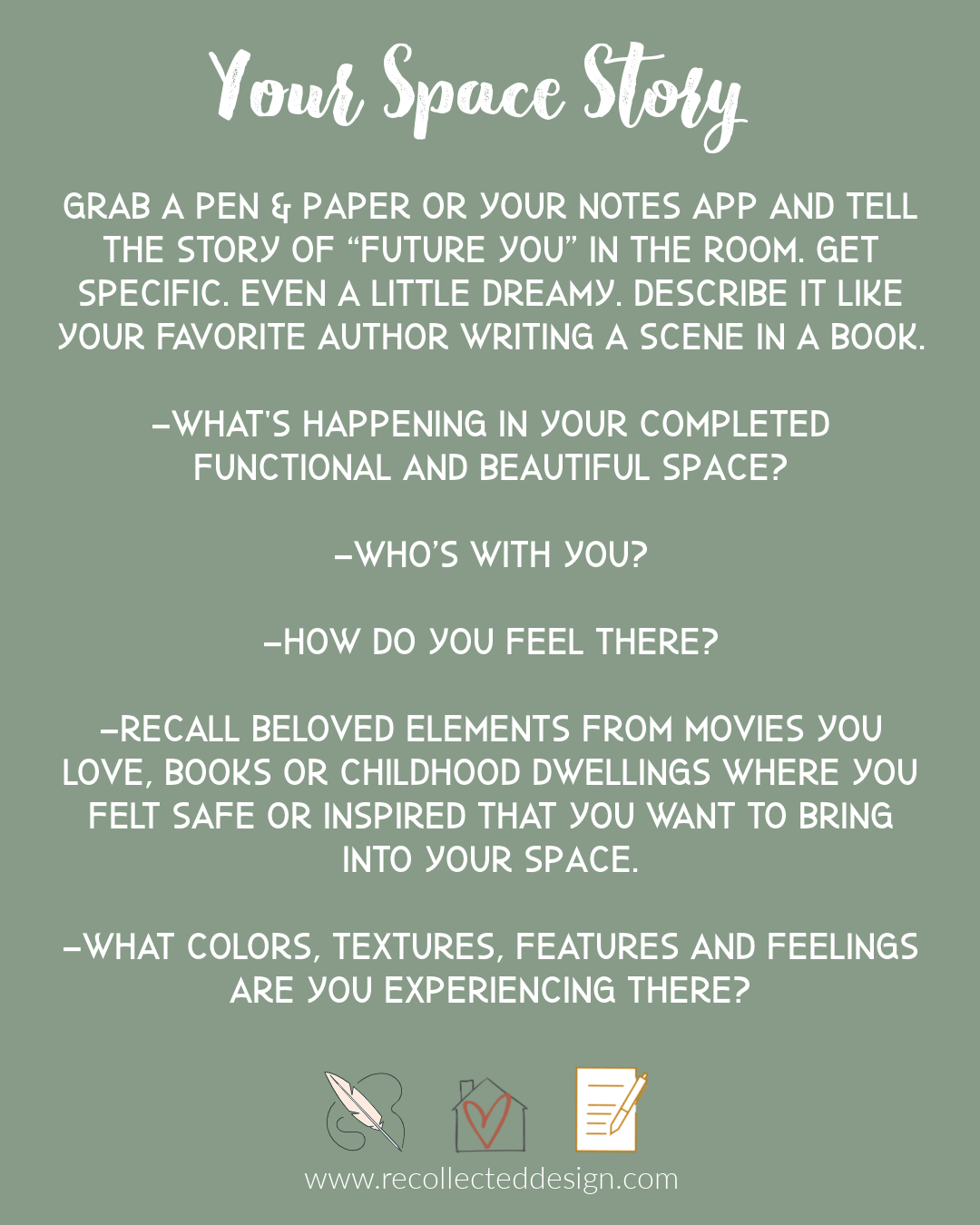
Whether you realize it or not we’re all telling a story about ourselves and our spaces. Why not take charge and make it a story that feels good to us?
I love the exchange Cheryl and Walter have in “The Secret Life of Walter Mitty” when she talks about taking the class about writing a mystery novel, “The key is to work backwards. Connect all the clues and then scatter them so they seem unrelated. There’s like a whole science to it.” Sounds like another reminder to start with the end in mind…
Build Your Board
Now that you have your unique personal vision you can use those feelings and descriptions to start building out your Pinterest board. These are your clues. Destinations on your design map. Signposts that help you discover your interior identity– your design preferences for visual clutter, symmetry and pattern just to name a few. (check out my post for more about that here…)
Take inventory of the images, remove the backgrounds and put them together in a mood board to guide you toward your design destination.

The story and feelings for this room shown in the mood board above were cozy, curated, sustainable and creative- a space like an artist would inhabit, inspired by nature, relaxed. A place for four family members to cuddle up and watch movies but flexible enough to host the guys for Sunday afternoon football parties. A calm & welcoming transition point from the perils of the outside world with a stylish place for everyone’s shoes, bags and coats.
The end story they had in mind became a lovely mid century organic modern haven. A cushy sofa with curated art, lamps and antique chairs. A waterfall dresser turned drop zone and MCM chairs with nature inspired coat racks. Antique arm chairs, plants and lighting that mimic hanging branches ripe with fruit. Fun patterns with a traveled feel.

Will your room turn out exactly like your mood board? It could- if you have an unlimited budget and are patient enough. Most likely it will be some variation of the overall themes. With any goal the end result is never the ultimate objective- it’s who we become along the way- the enjoyment we get from the journey- and the same goes for creating our ideal environment.
So if you’re creating something from scratch here’s a quick overview of how I define the phases of design to take the overwhelm out of deciding and make it feel doable.
Follow This Blueprint From My Design Playbook
‣Phase 1: Dream
Tell the story, find the feelings
‣Phase 2: Define
Define your why, make your pin board, decode your interior identity
‣Phase 3: Decide
Make your mood board, choose your color palette (include colors that are not changing- i.e. floor or cabinets)
‣Phase 4: Budget
Money, time, creativity
(more on the first 4 phases here …)
‣Phase 5: Space plan & settle on your furniture
Work from largest to smallest pieces and make sure each seat has a supporting surface for your coffee or adjacent storage for holding your favorite books. (read more about space planning and get my favorite hacks here )
‣Phase 6: Lighting & Drapes
The jewelry of the room. Decide where you need tasking, ambient or light control- as in blackout drapes or blinds at the windows.
‣Phase 7: Floors, Walls & Ceiling
Rugs, wall treatments and paint. Choose your paint color last to coordinate with any rugs, wallpaper or furniture already chosen- it’s the most flexible of all the finishes and there are infinite choices.
‣Phase 8: Finishing touches
Accessories, art & personal collections. Jazz it up or keep it simple with pillows & plants.
Keep your mood board and interior identity sheet handy -you’ll refer to it often to vet your choices as you build out your dream room.
(Ready to start designing your dream space with clarity? Download my free Interior Identity Guide to help define your style and story!)
Be ok with going slow. Don’t settle. Get intentional- hone your aesthetic and get clear on dimensions so you know what to look for and can act on it when you see it. If you’re sourcing items from FB Marketplace or Antique malls, give yourself time to collect. Don’t just design by chance or the paint available in the “oops” aisle.
Remember, action brings clarity. So put down the magazine and flip the iPad case closed. Too much pinterest will actually intimidate instead of inspire.
Your inner story has all the clues to get you to the design destination you’re dreaming of and I can’t wait to see what you create.

Feeling stuck? Sometimes you need an outside perspective to help connect the dots. That’s where I come in. As your creative design companion, I help translate your inspiration into a cohesive plan—no moving truck required.
💡 Ready for a one-room virtual redesign? [Click here] to schedule your session.


 recollecteddesign.com
I love reading post from another blogger with a heart for design. Thanks for sharing at the party this week and this post will be a feature. #HomeMattersParty
LikeLike
Aww.. thanks Donna! ♥
LikeLike